Social Impact Catagory
TIME's Best Inventions of 2025
0-1 Redesign • Shipped 2025
TL;DR
Redesigned an enterprise internal CMS to scale metadata and copyright tagging using AI-assisted workflows with human-in-the-loop guardrails.
Outcome
~60% faster time-to-publish for new libraries
~3× faster content ingestion during tagging workflows
Fewer metadata errors and reduced legal risk during review
A digital library used over 15 countries and more than 300,000 users
SolarSPELL is a portable solar-powered digital library that works as an offline Wi-Fi hotspot, giving users access to curated educational content without an internet connection.
OVERVIEW
Spell CC is internal enterprise Content Management System (CMS) used to create, tag, and organize educational resources for digital libraries.
It helps teams tag metadata, manage copyright, and assemble libraries efficiently at a single, scalable workspace.
I led end-to-end product UX decisions across AI interaction models, validation flows, and system guardrails.
THE PROBLEM
The 2015 UI surfaced over 40 ungrouped metadata fields across multiple screens, with no progressive disclosure, weak validation, and error feedback only after submission.
Curators often discovered mistakes late in the process, triggering full rework cycles and delaying library publication by weeks.
We didn't need a UI Refresh.
We needed to transform the tool from a "Database Form" to an "Intelligent Curation Workspace.
KEY CONSTRAINTS
Primary Constraint
Cost of correction
Metadata errors increased rework, QA cycles, and redeployment effort.
Primary Constraint
Legacy backend
The UI had to work with old backend without breaking historical data.
Primary Constraint
Copyright risk
Incorrect tagging created legal exposure and required strict validation.
Given these constraints, we couldn’t rely on either full manual workflows or unchecked automation.
KEY DEISGN HYPOTHESIS
We hypothesized that AI could meaningfully reduce manual metadata effort if curators remained accountable for every final decision.
The challenge was introducing automation without eroding trust, accuracy, or legal confidence.
OPERATIONAL RISK
1. Trust and Quality Risk
Curators re-verified nearly every field due to low confidence in system outputs.
2. Time and Throughput Constraints
Manual entry scaled linearly with content volume, creating hard bottlenecks during peak demand.
3. Structural Limitation of the Tool
The form-based UI forced curators to think in database terms rather than library-building workflows.
To understand how to resolve this, I worked with the in-house UX research team to closely examine where the existing curation flow was breaking down.
RESEARCH OBJECTIVE
Define the right balance between AI assistance and human control in metadata and copyright tagging.
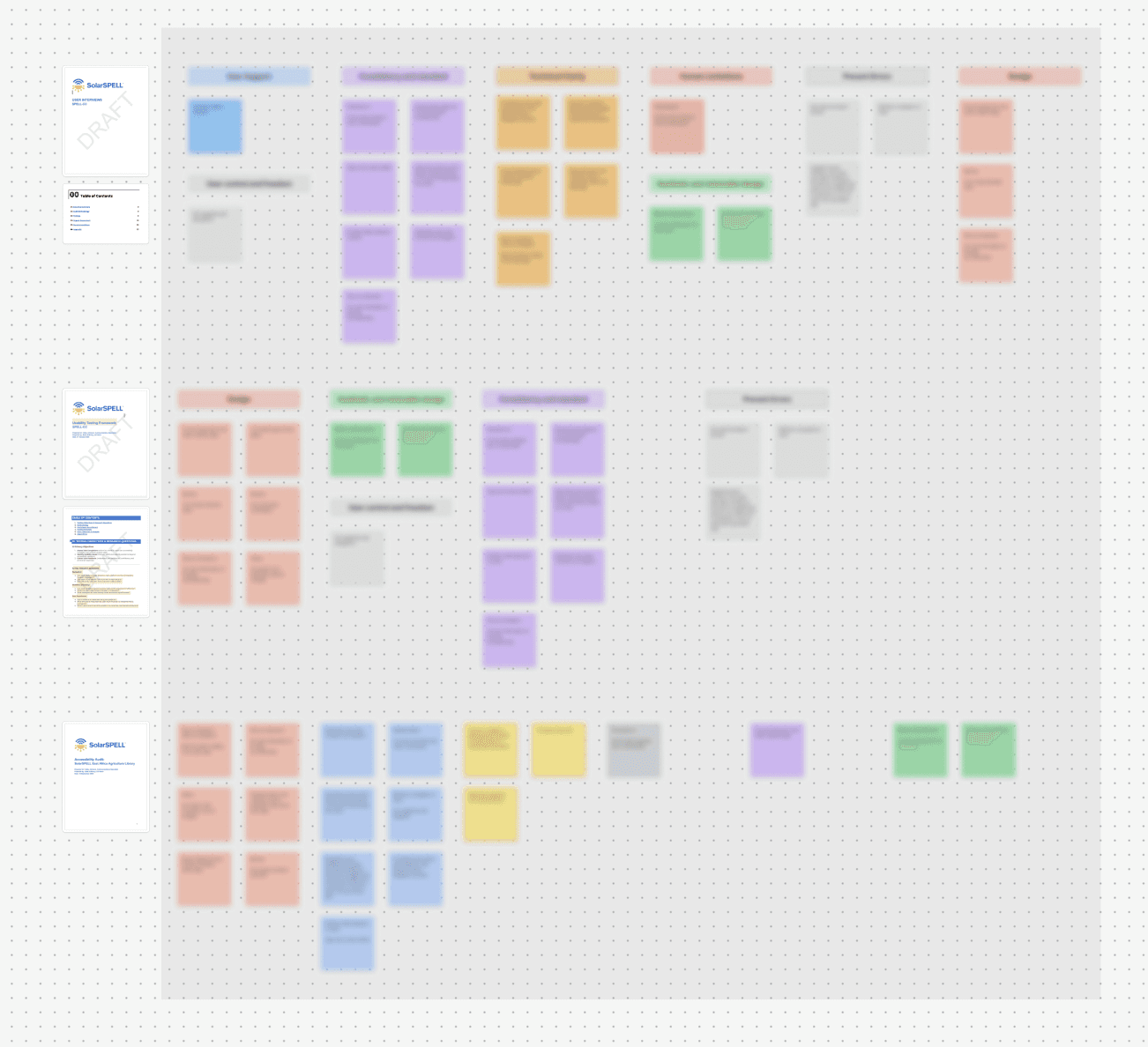
Heuristic evaluation
10+ interviews with lead curators
Reviewed existing human-in-the-loop patterns in production AI tools to inform where automation should stop and human review should begin.
CORE INSIGHT
Research showed that curators were open to AI assistance as long as it did not replace their judgment.
This showed up most clearly during live tagging, where curators paused longest on copyright attribution and ambiguous subject fields.
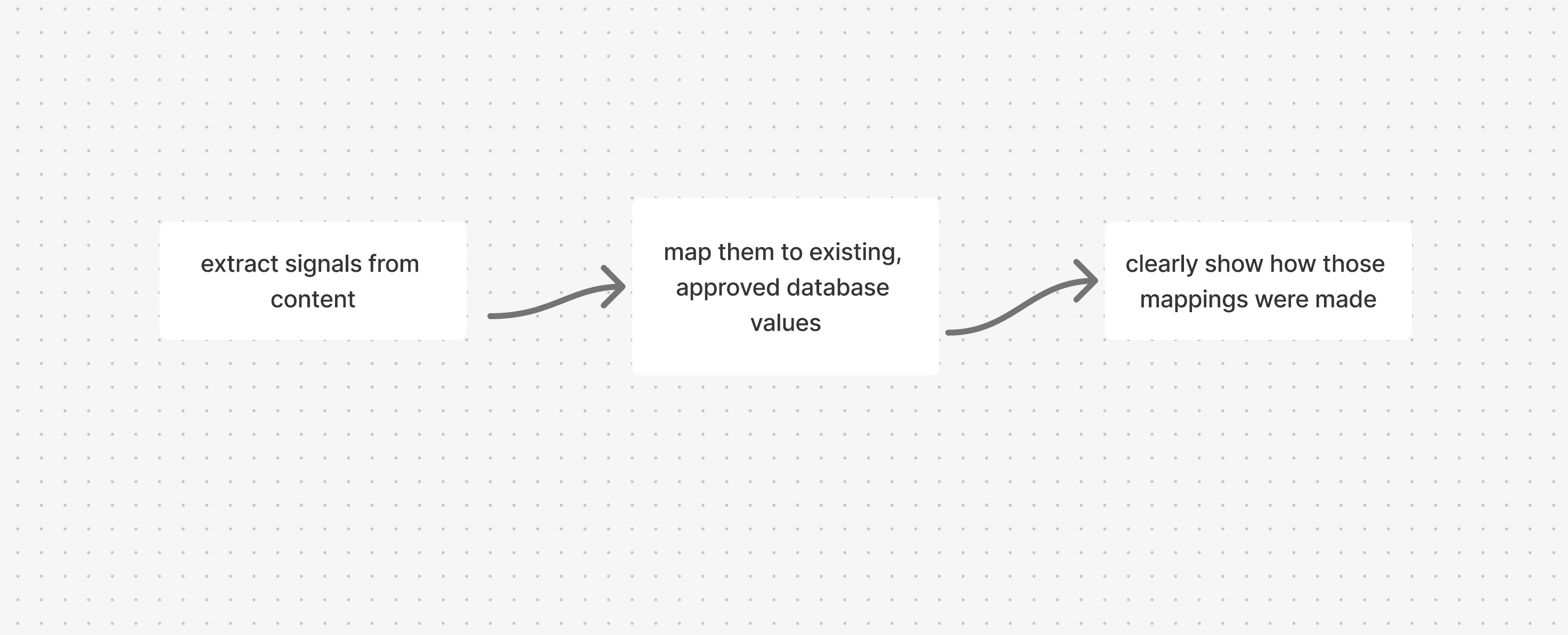
Because SPELL-CC already relied on structured metadata and copyright schemas, curators needed AI as a Co-pilot, not an Autopilot.
This insight led to two core principles that shaped the redesign:
Explainable AI (XAI)
AI surfaced suggestions mapped to existing databases.
Human-in-the-Loop (HITL)
Curators reviewed, edited, or approved each suggestion before it was saved.
This reframed the design challenge from “How do we automate tagging?” to “How do we reduce effort while preserving curator confidence and accountability?”
DESIGN DECISIONS & TRADE-OFFS
Instead of jumping straight to a solution, the redesign was grounded in explicit trade-offs.
Decision 1
AI as a Co-pilot, Not an Autopilot (Metadata Tagging)
Trade-off: Speed vs trust
Result: We designed AI to assist, not decide. Suggestions were surfaced with confidence signals and required explicit human approval, enabling ~3× faster ingestion without sacrificing accuracy or accountability.
Decision 2
Just-in-Time Legacy Data Cleanup
Trade-off: System purity vs delivery velocity
A full migration was proposed but rejected due to timeline risk and the likelihood of blocking active curation work.
Result: We adopted a just-in-time cleanup strategy that improved data quality within active workflows while avoiding migration paralysis and preserving operational continuity.
WHAT WE EXPLORED
Before moving into high-fidelity design, we explored multiple approaches to AI assistance and library management to understand trade-offs around control, efficiency, and scale.
Concept 1: Field-level AI metadata assistance
AI supported curators at the individual metadata field level, offering contextual suggestions on demand.
Why it was tempting
Maximum accuracy
Low risk
Why it failed
Still doesn’t scale
Limiting efficiency
Concept 2: Fully Autonomous AI Tagging
One-click ingestion
Auto-save metadata
Why it was tempting
Maximum speed
“Wow” factor
Why it failed
Curators didn’t trust it
High legal and educational risk
Concept 3: Batch-oriented library management
Library organization was handled through a dedicated modal, allowing selected content to be reassigned in a single step.
Why it was tempting
Felt safer and more predictable for copyright-sensitive data
Minimized accidental structural changes and provided a controlled way to manage content at scale.
Why it failed
Could not handle edge cases or new content types
Removed content from its broader context, making it harder to reason about library structure holistically.
Concept 4: Assisted Tagging (HITL)
AI suggests
Human approves
Explicit confidence + evidence
Why it wasn’t obvious
Added interaction overhead
Required careful UX to avoid slowing experts
Why it Worked
Balanced speed with trust
Fit curator mental models
Scaled without new risk
HOW WE KNEW WE WERE RIGHT
We ran quick usability tests to validate our options
Curators preferred reviewing drafts over typing from scratch
Confidence indicators reduced re-check time
Forced approvals reduced anxiety, not speed
THE FINAL SYSTEM
Rather than optimizing for visual novelty, each iteration focused on answering a single question:
Does this reduce effort without reducing confidence?
AI-Assisted Metadata Tagging (HITL)
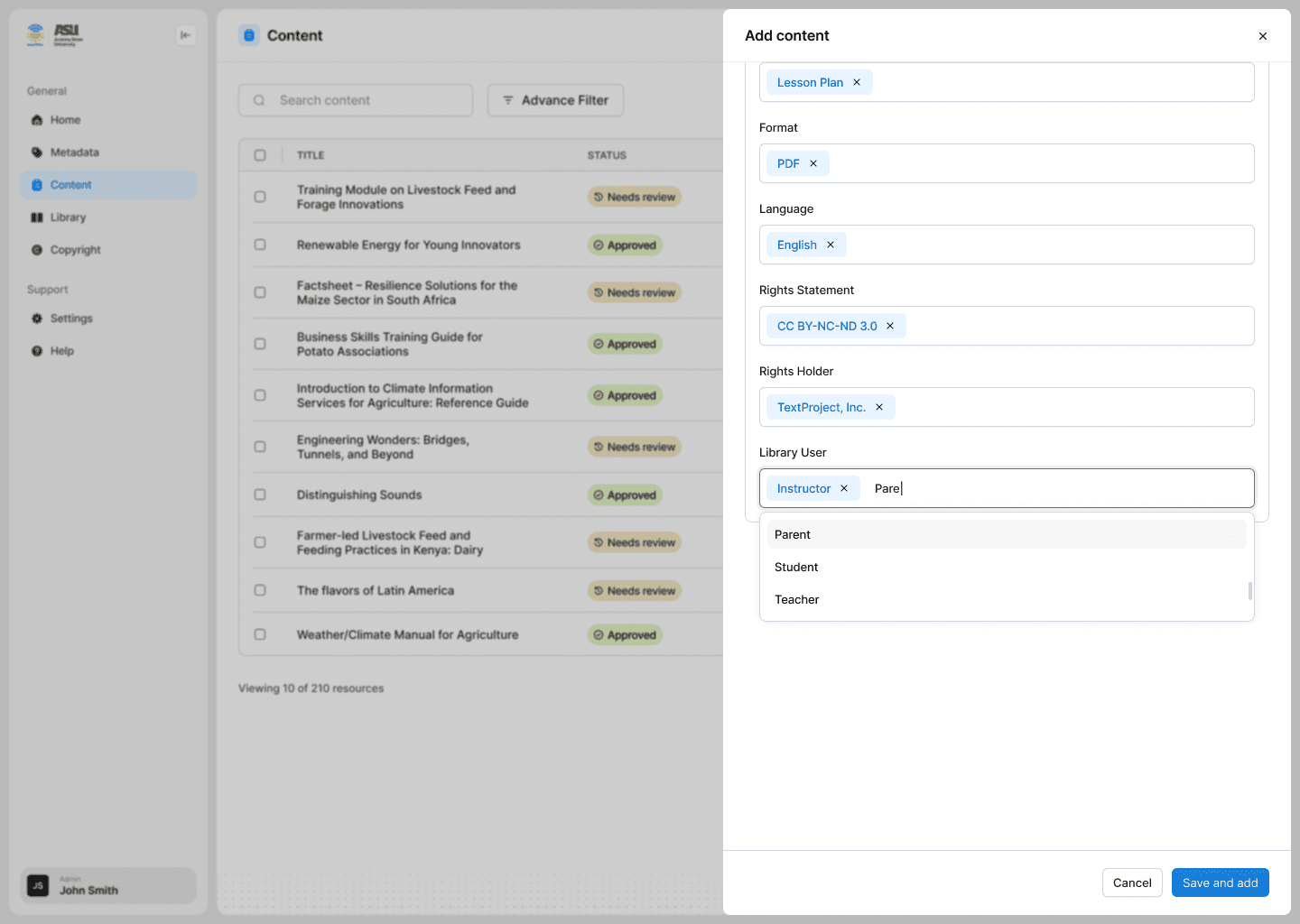
AI extracts metadata and maps it to SPELL-CC’s existing taxonomy.
Suggestions appear as drafts
Low-confidence fields require human intervention
Forced approvals reduced anxiety, not speed
Result: Reduced repetitive work while preserving accountability.
Copyright Checks & Compliance
Structured copyright workflows replaced unstructured free-text entry.
Guided templates and attribution fields
Publisher cross-checks
Hard blocks for invalid or unsafe inferences
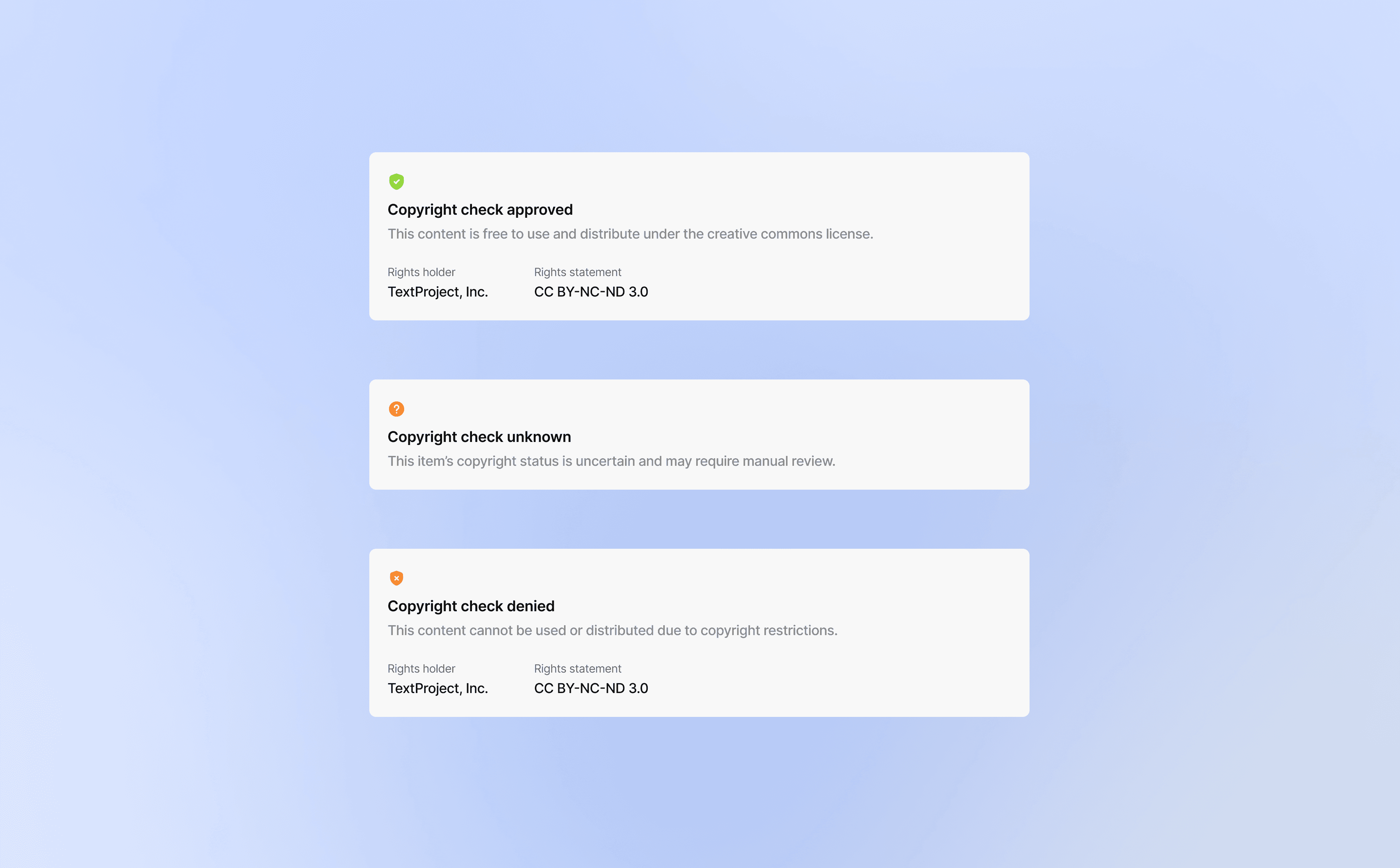
Reduced legal risk and eliminated inconsistent copyright tagging.
Clean & Improved UX / UI (Foundational)
The redesign established a clear, consistent interaction model across the platform.
Clear information hierarchy
Visible system state at all times
Consistent component patterns aligned to SolarSPELL’s brand
Old Design:
Redesign
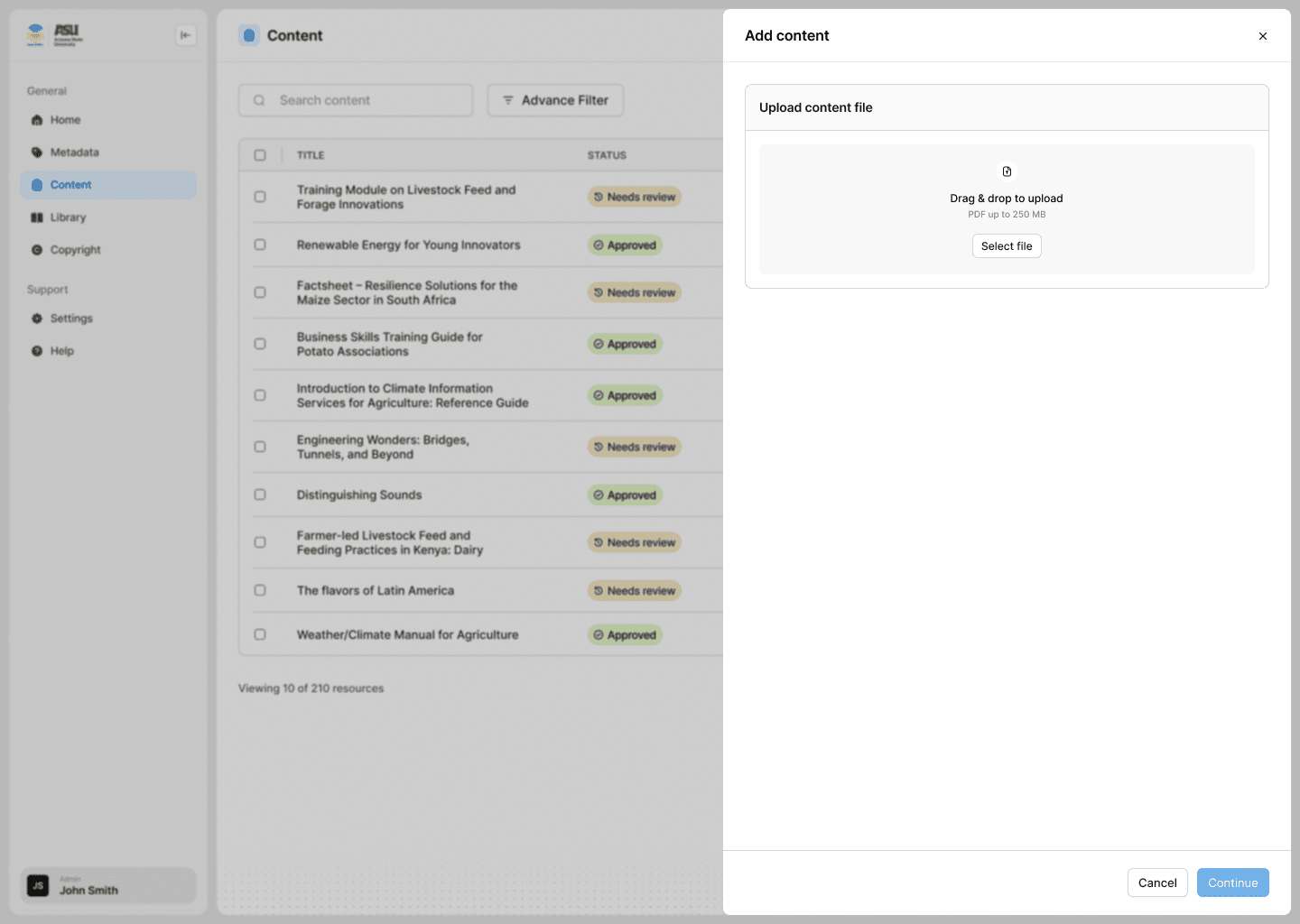
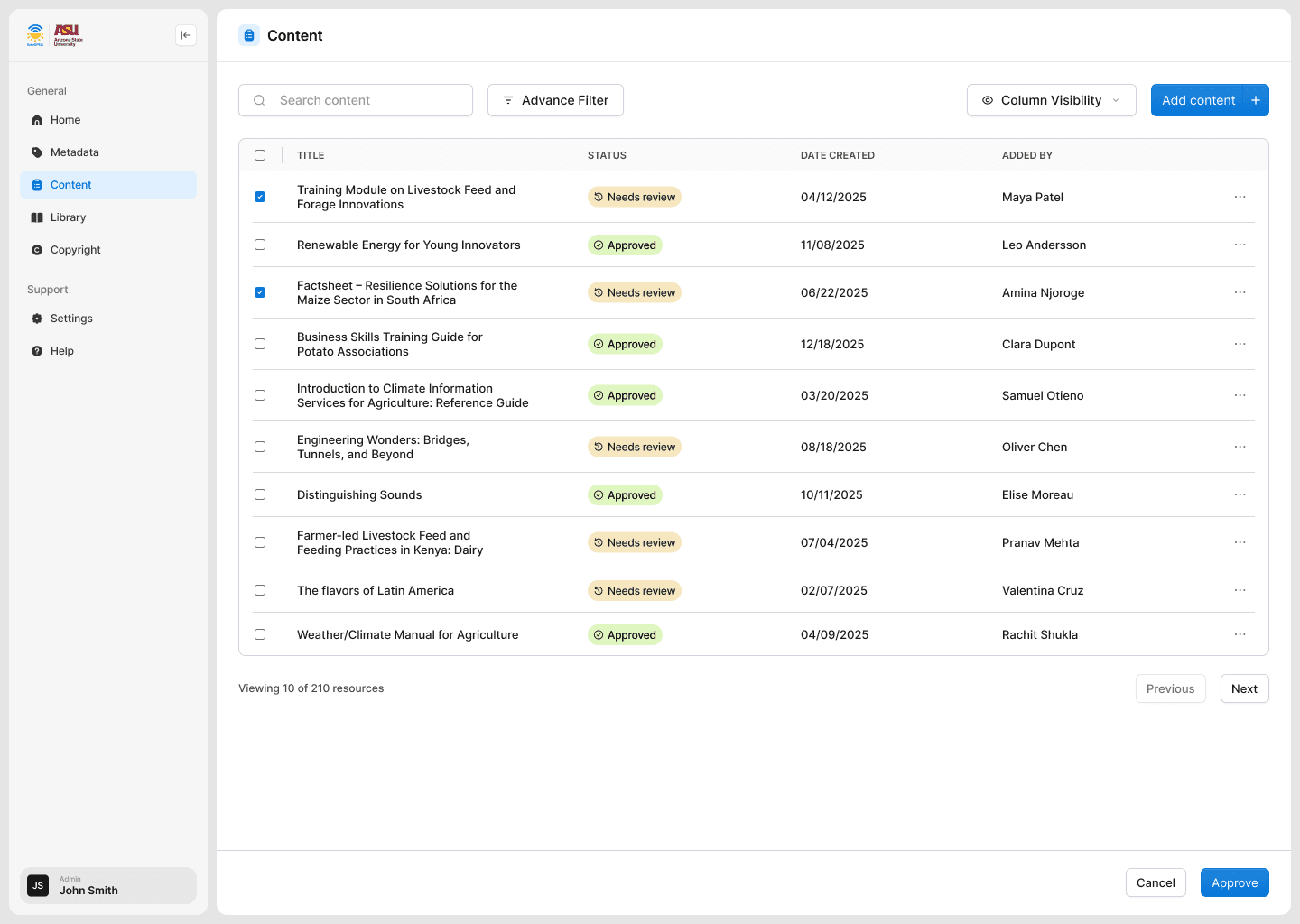
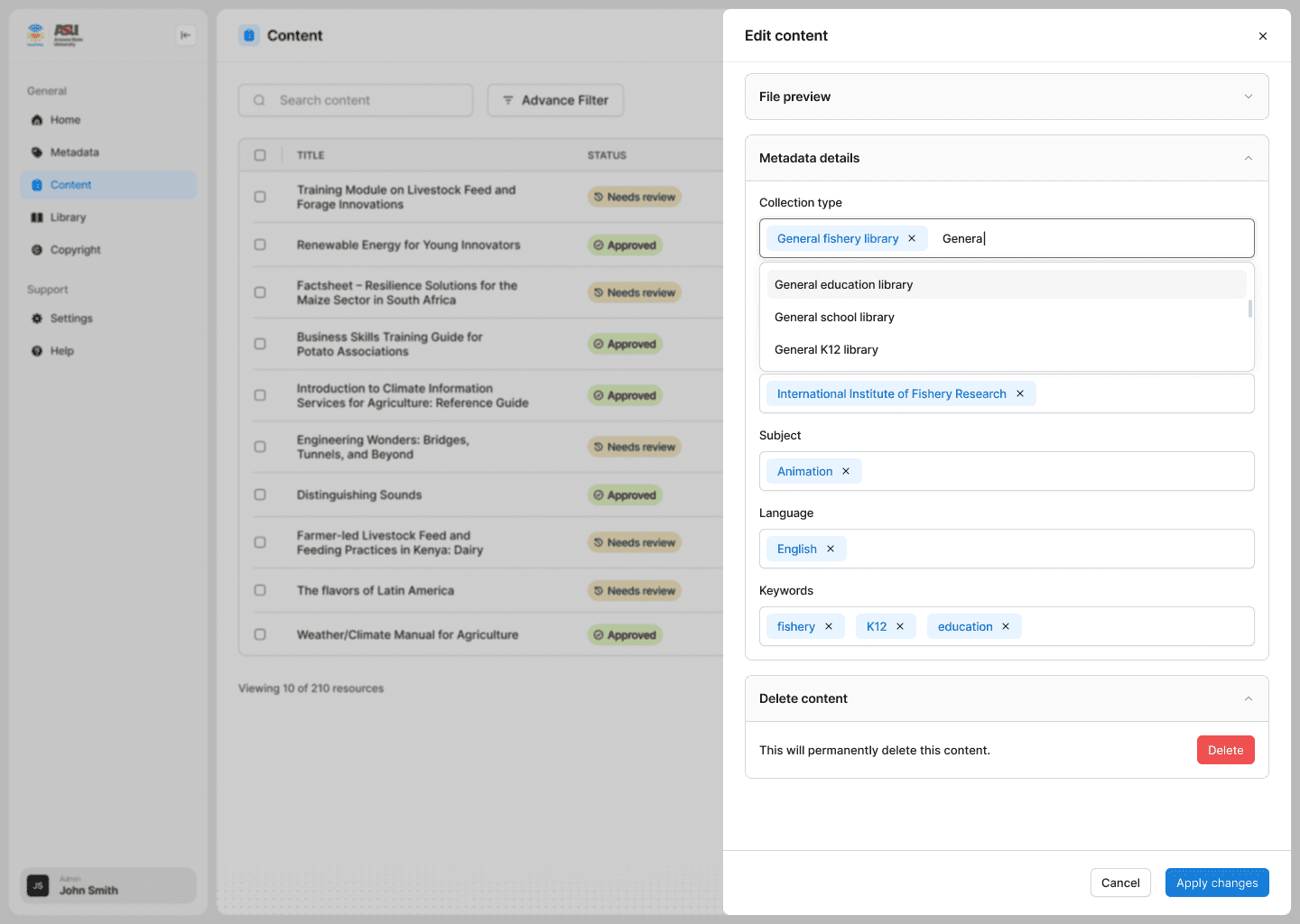
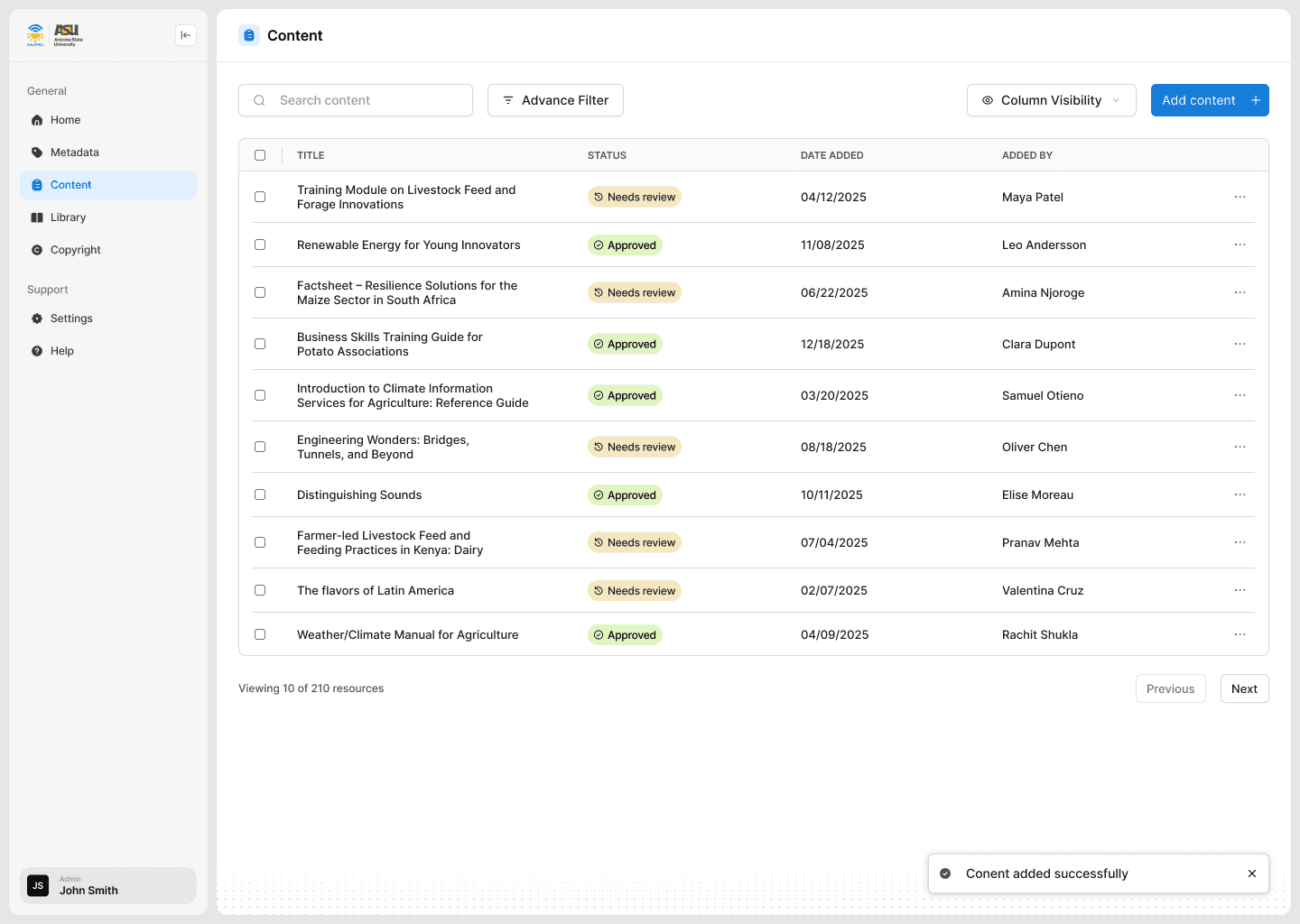
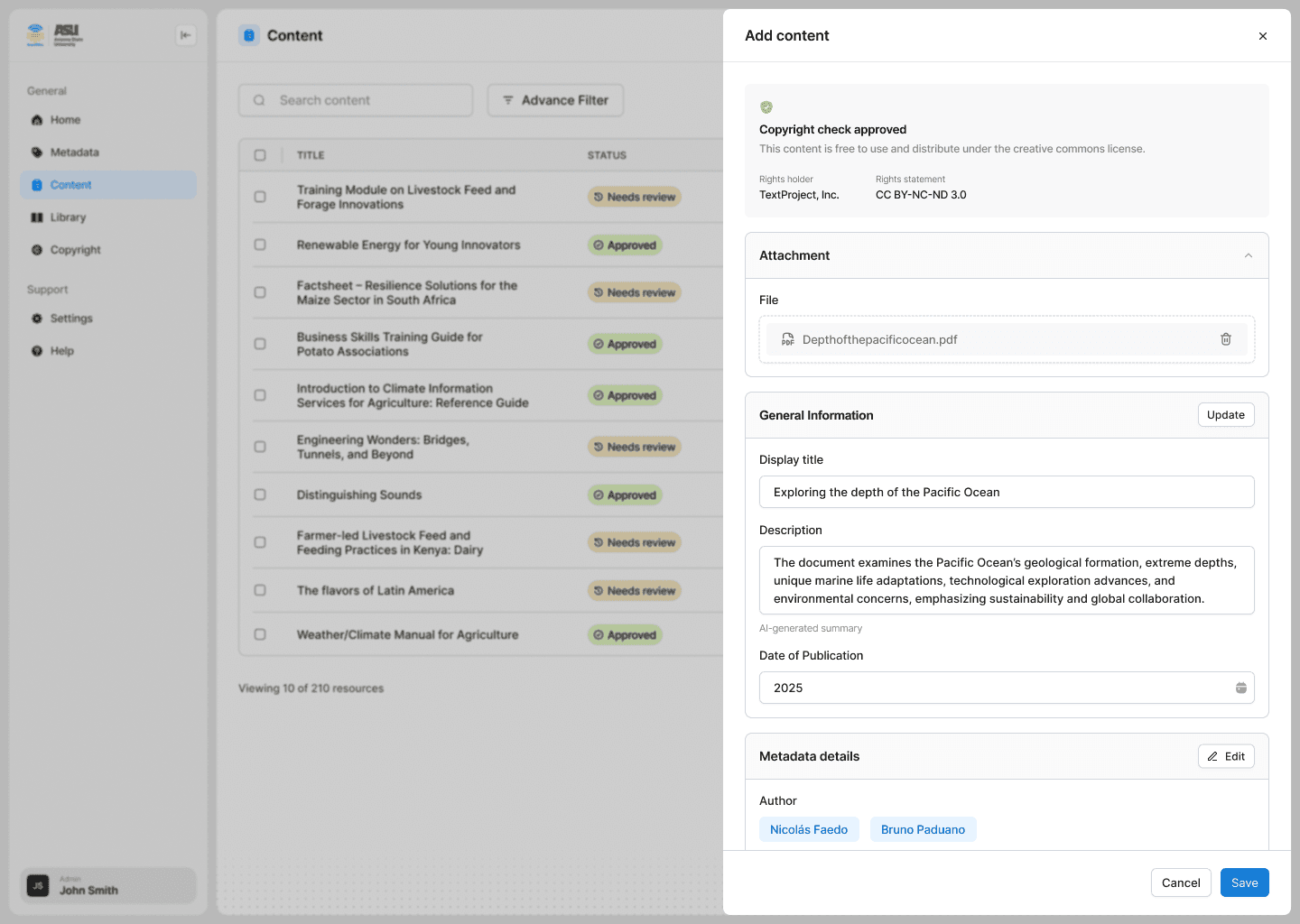
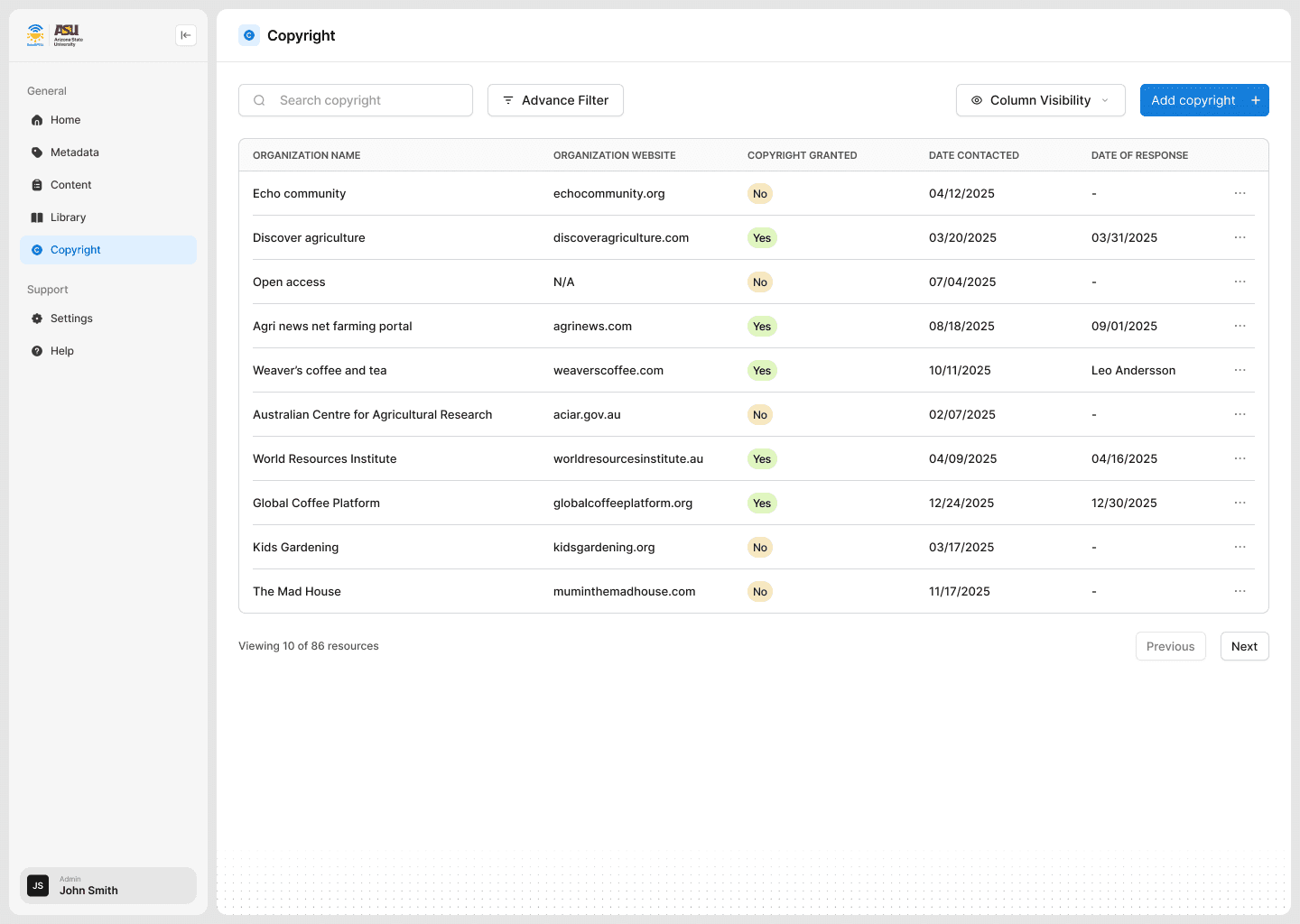
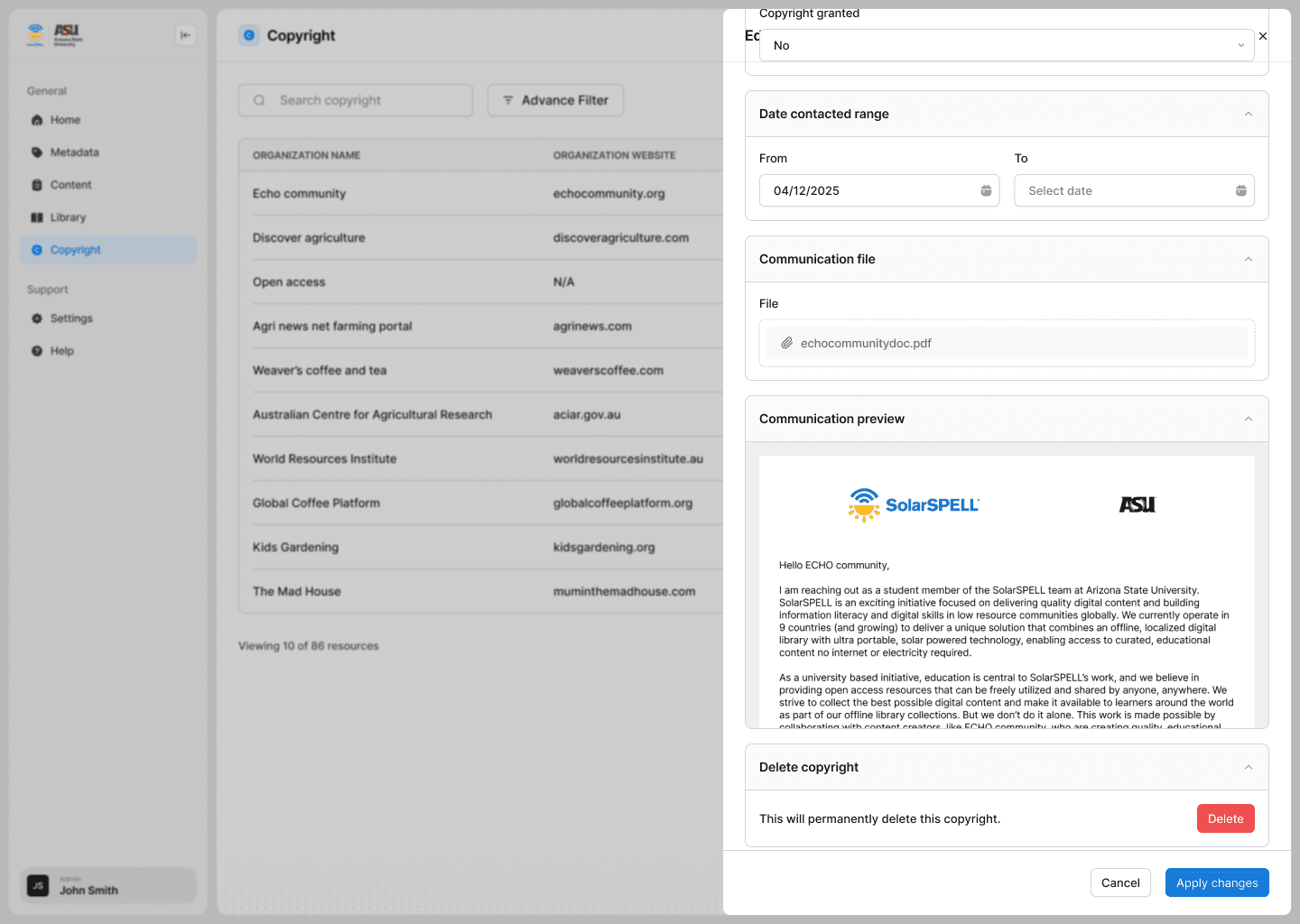
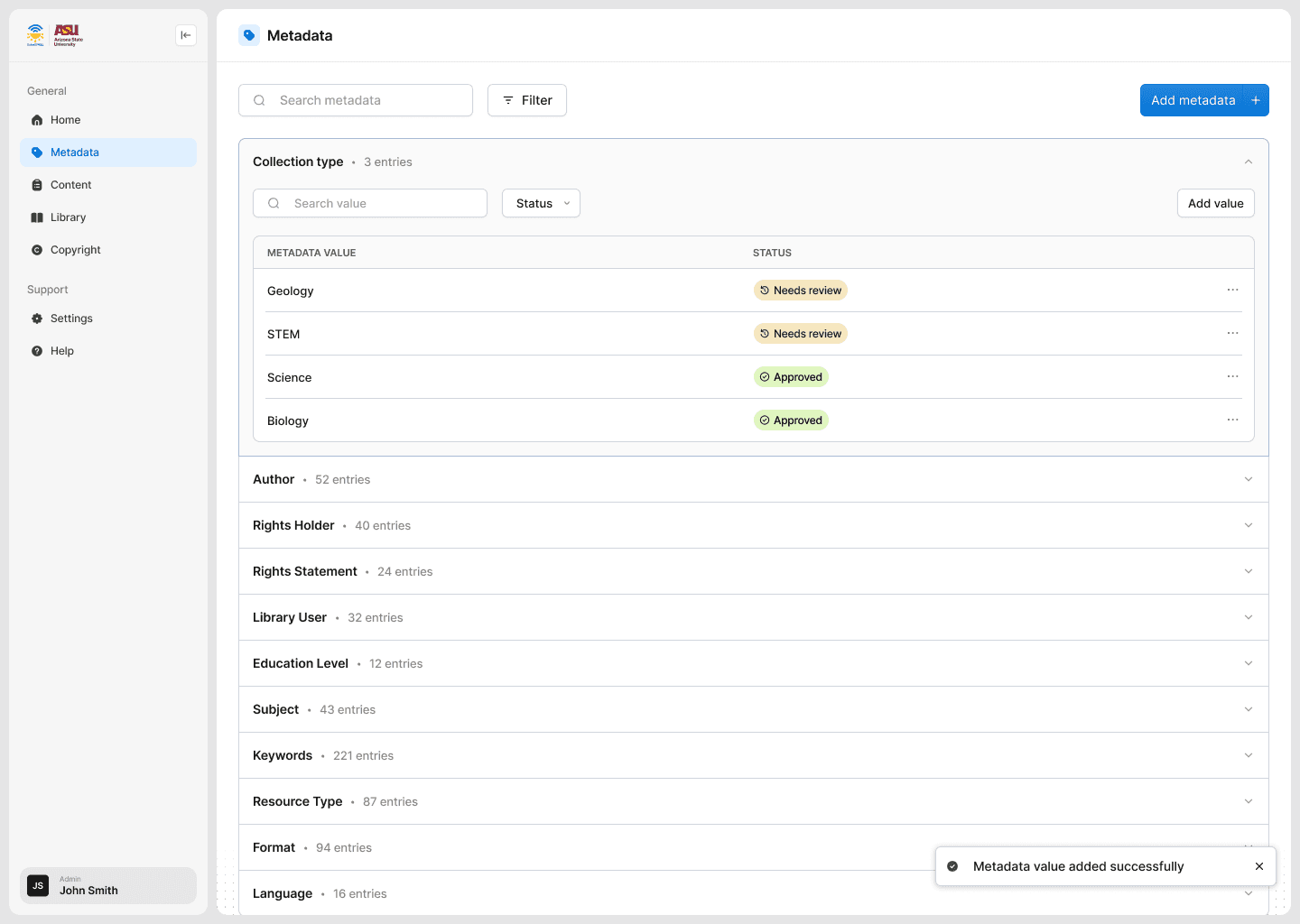
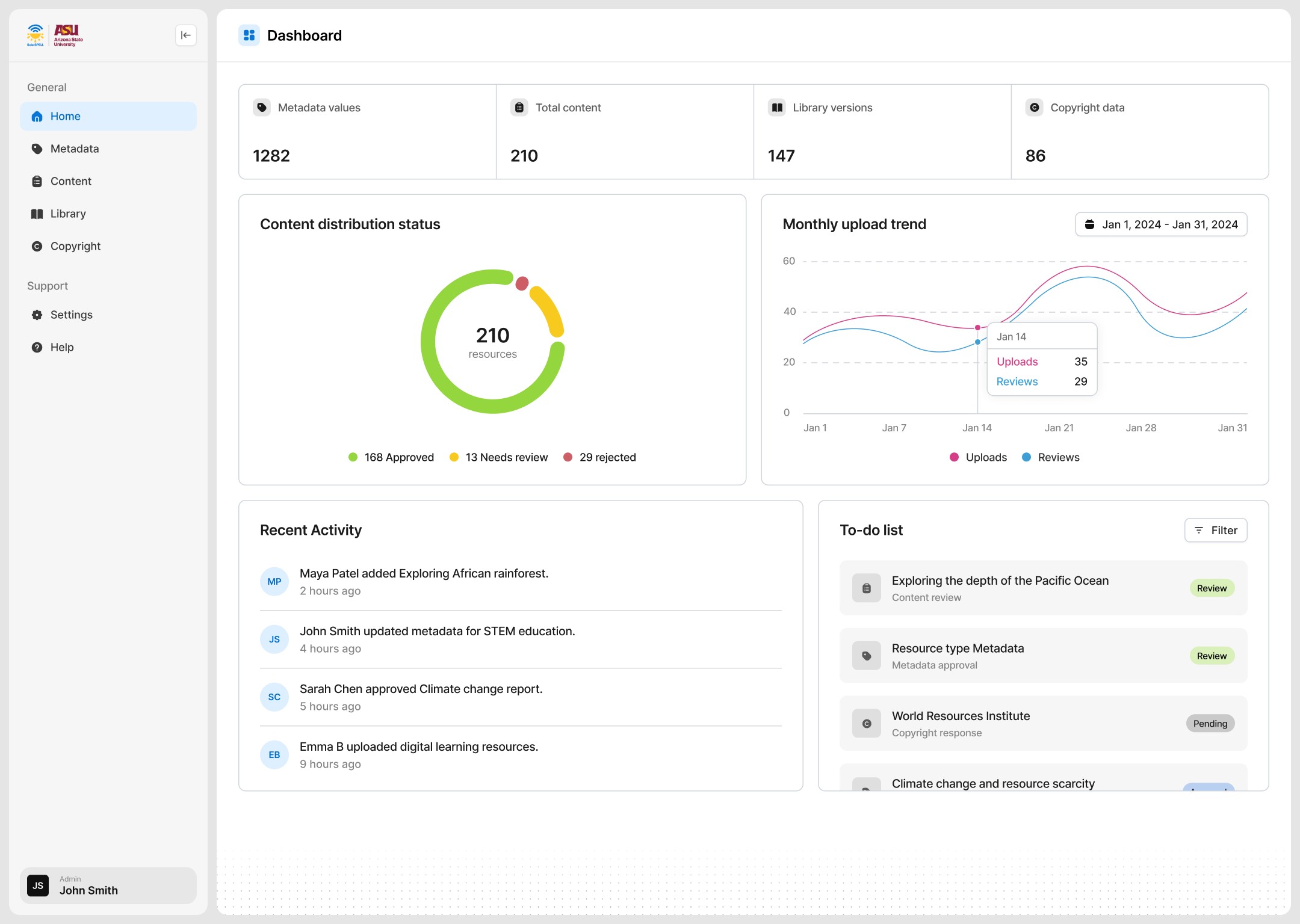
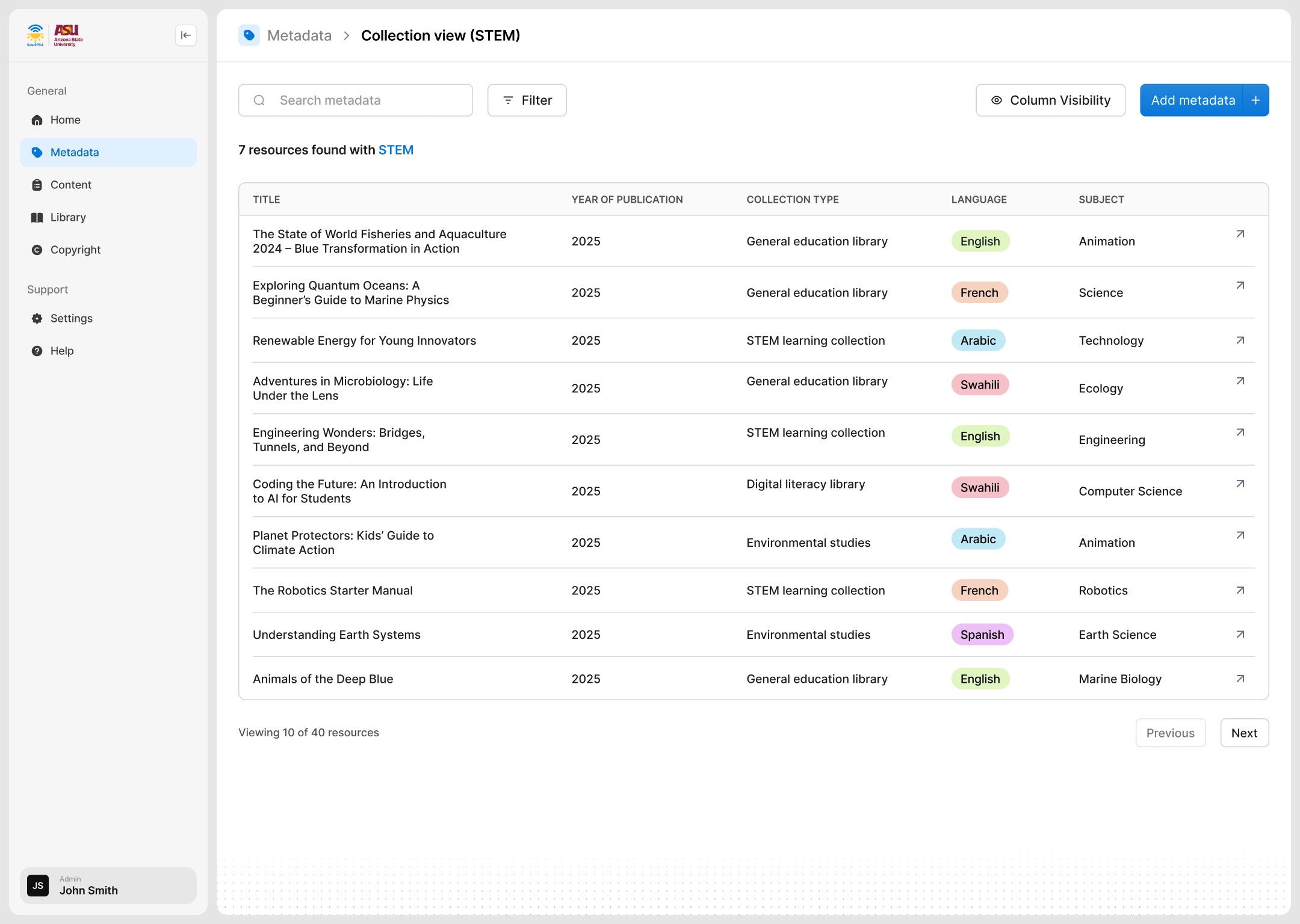
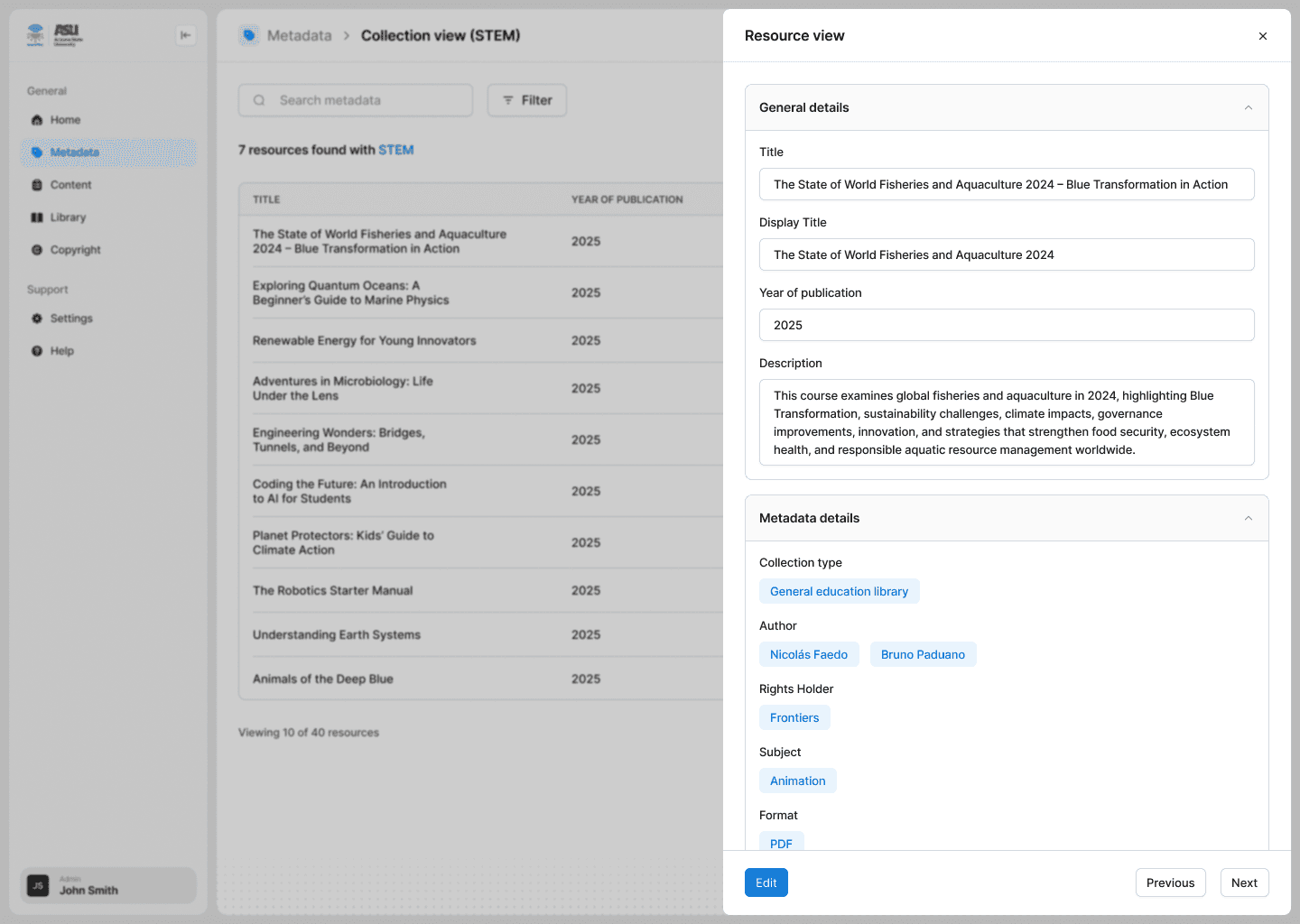
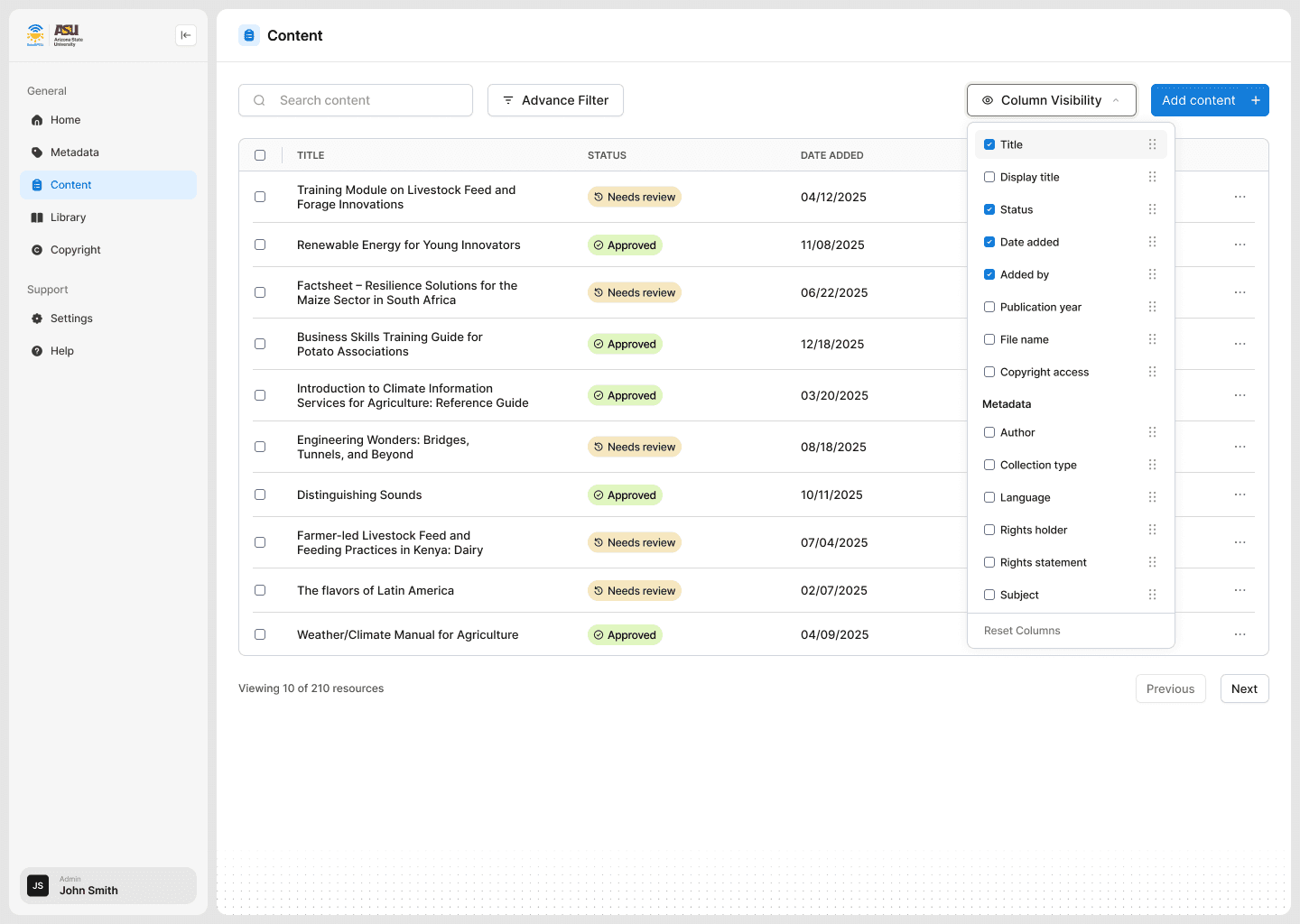
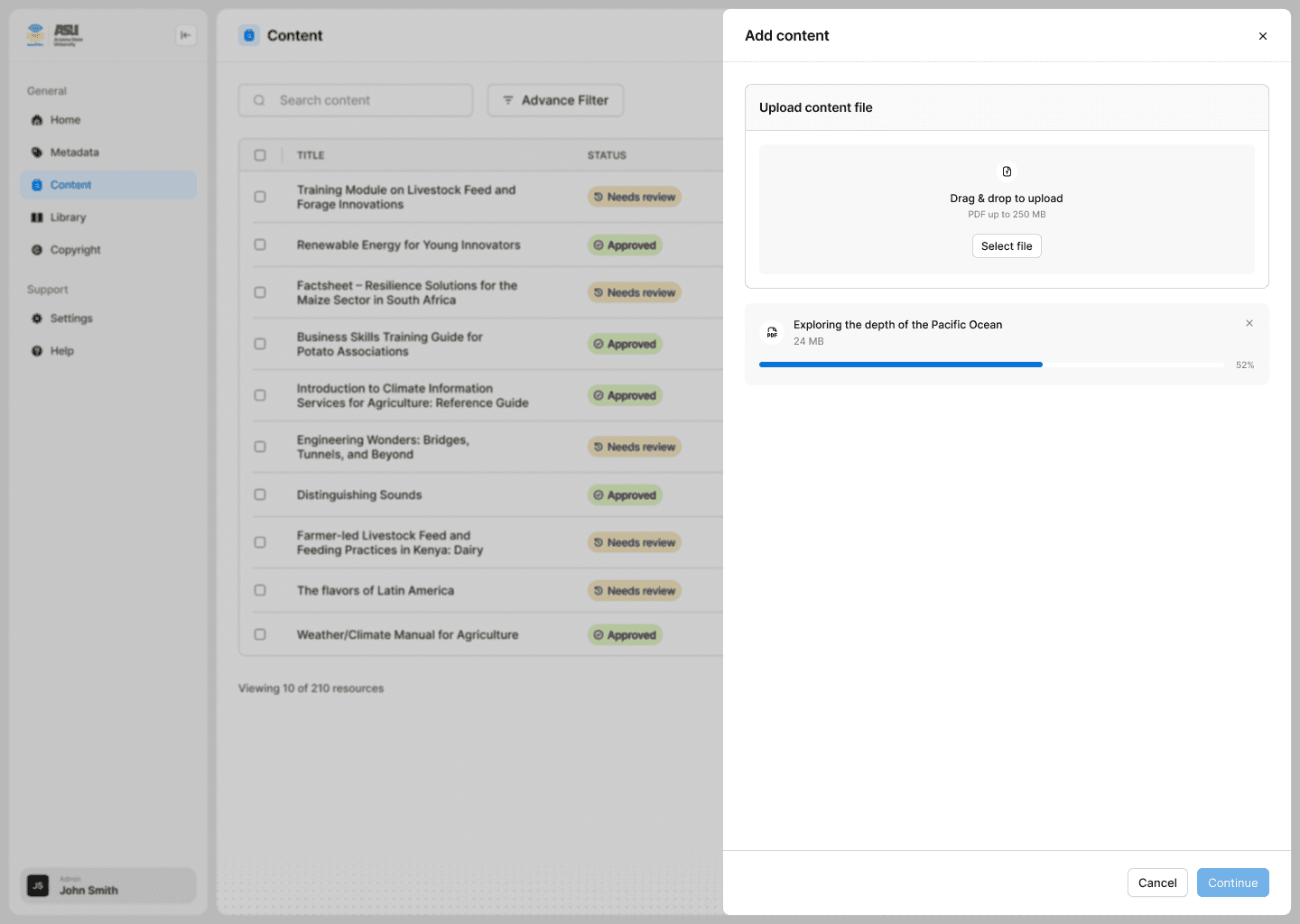
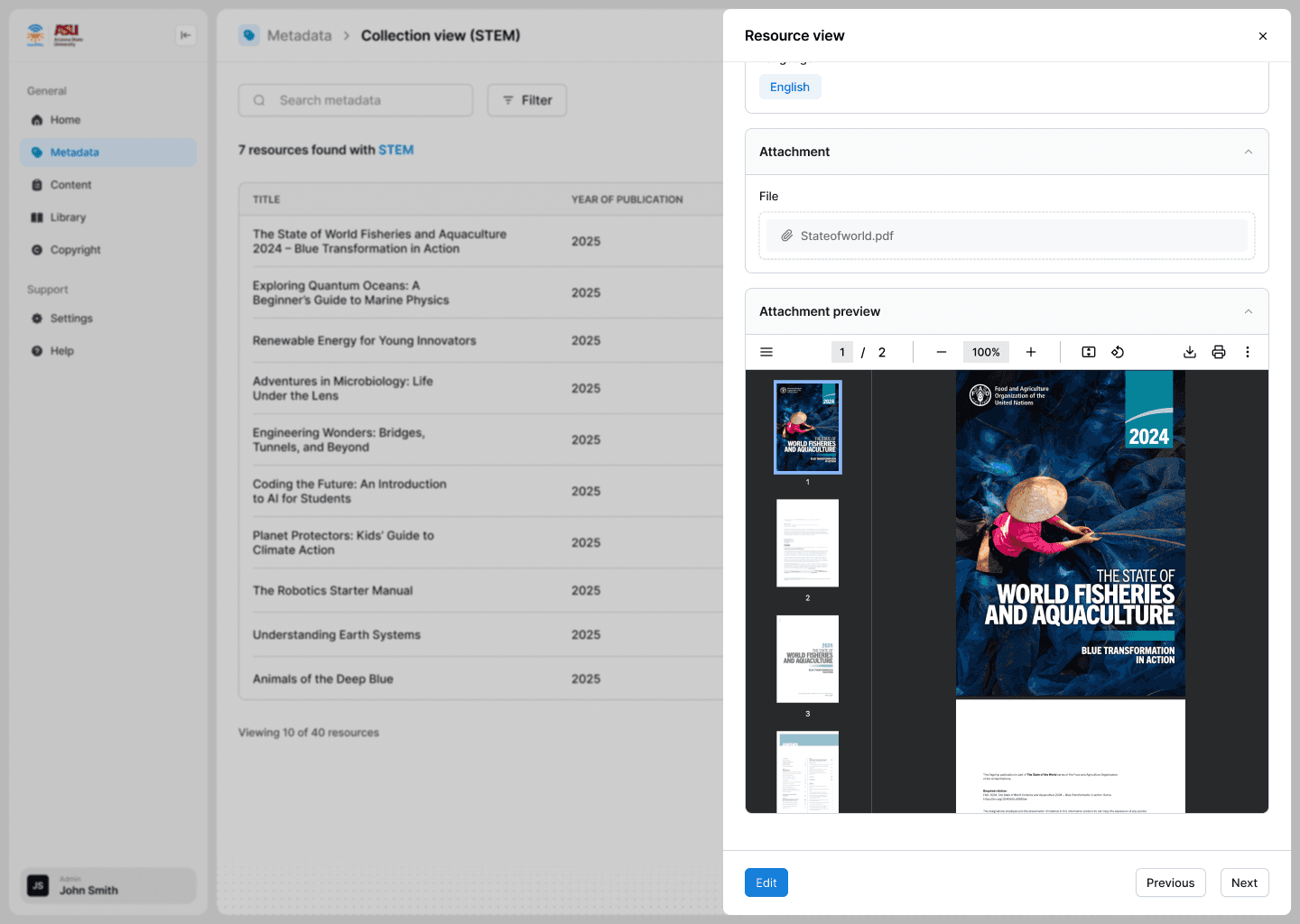
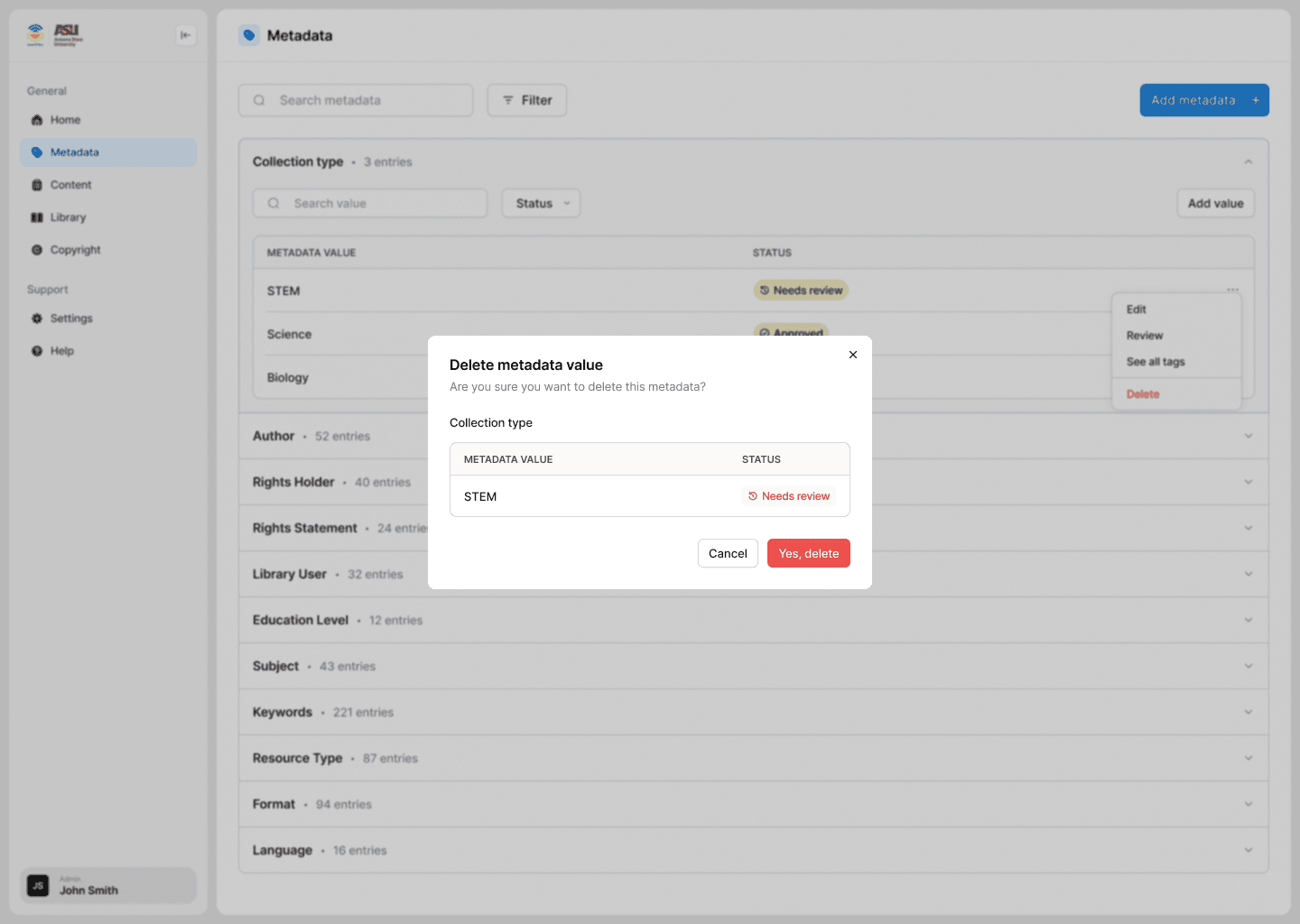
Result: Lower cognitive load and higher confidence in system decisions.
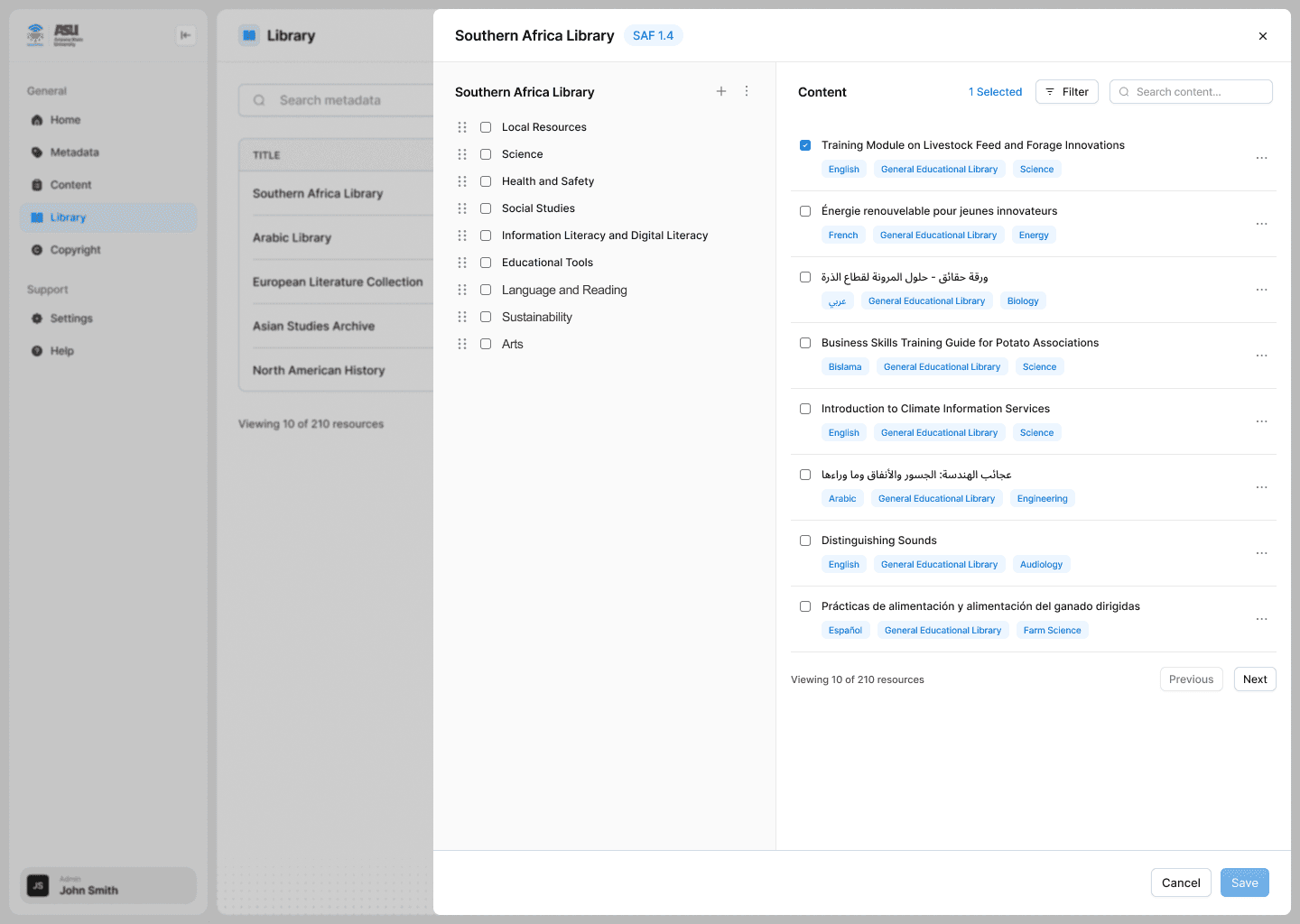
Visual Drag-and-Drop Library Builder
Library creation shifted from nested forms to a visual assembly model.
Drag-and-drop interactions
Side Drawer repository + collection view
Completeness and duplicate indicators
Result: Library structuring time dropped from hours to minutes.
AI GUARDRAILS & FAILURE PREVENTION
AI-assisted workflows were designed with explicit limits to prevent silent errors and protect high-stakes decisions.
AI suggestions never auto-commit
Publisher cross-checks against known databases
Restricted to controlled metadata taxonomies
IMPACT & VALIDATION
Metrics were measured during a pilot with a core group of curators tagging live content over multiple production cycles, comparing baseline manual workflows to AI-assisted flows.
Early results
~60% reduction in time-to-publish for new library collections
Fewer metadata corrections required during review
~3× faster content ingestion during AI-assisted tagging workflow
What I’d Do Next
With a trusted foundation in place, the next phase would focus on scaling insight rather than automation.